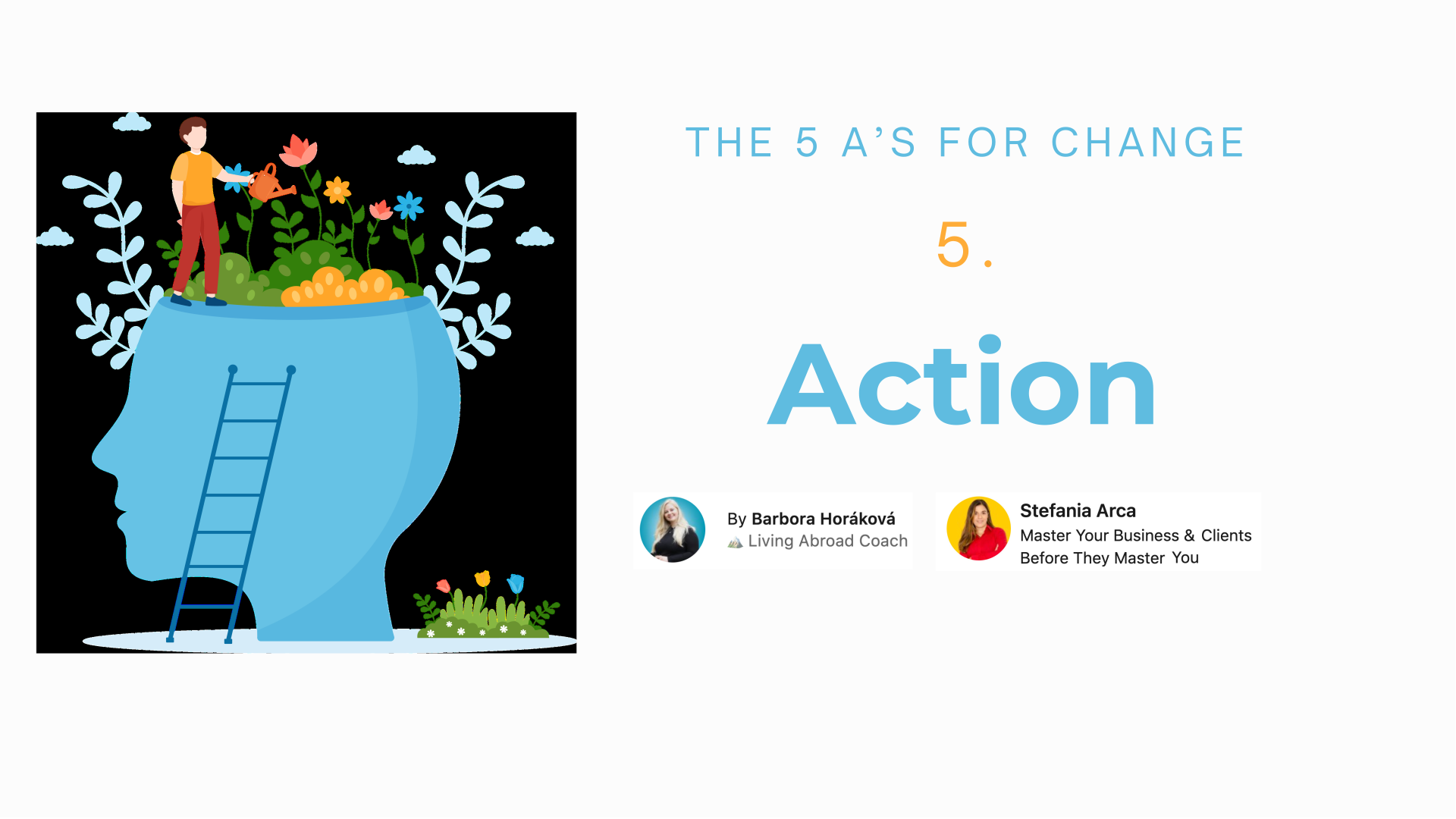
Action is the difference between movement and mental gymnastics.
Taking action for change is where transformation moves from theory to reality. You’ve built awareness, developed acceptance, mastered adaptability, and committed to accountability. However, without deliberate action for change, you’re still operating in the planning phase where everything feels productive but nothing actually shifts.
Most people think action for change means having perfect clarity before moving. Rather, it’s about taking the first step when you’re only 70% ready and letting the journey teach you the rest.
Why Action for Change Is the Ultimate Game-Changer
We live in an age of endless preparation. Consequently, people research, plan, and strategise indefinitely while their circumstances remain unchanged. Therefore, the gap between knowing and doing has become the primary obstacle to transformation.
During my LinkedIn Live series with mindfulness coach Barbora, we explored why action for change becomes the make-or-break moment in any transformation journey. Thinking about doing something is not doing it. Planning it is not doing it. Talking about it is not doing it.
Furthermore, taking action for change means accepting that your first attempts won’t be perfect. However, this messiness is essential—it provides the feedback you need to refine your approach and build momentum.
“Action is the difference between movement and mental gymnastics. At the beginning, there’s not going to be any clarity. You have an idea, you have a plan, but the reality is that the first step is never going to get the result you’re expecting.”

The Messy Reality of Action for Change
Here’s what nobody tells you about taking action for change: it will feel chaotic at first. Barbora Horáková and I discussed how the process isn’t linear, and initial attempts rarely match your expectations. Nevertheless, this apparent messiness is actually progress.
The breakthrough insight: clarity comes after action, not before. Each step you take provides information you couldn’t access through planning alone. Moreover, this feedback loop allows you to adapt your approach based on real-world results rather than theoretical assumptions.
Taking action for change means embracing the learning process rather than demanding immediate perfection. However, this doesn’t mean acting recklessly—it means moving forward with the information you have while staying open to course corrections.
Breaking Free from the Overthinking Trap
The biggest barrier to action for change is overthinking disguised as preparation. During our live discussion, we identified how people get trapped in endless planning cycles because they fear making mistakes.
The uncomfortable truth: you’re procrastinating when you keep refining ideas instead of testing them. Furthermore, overthinking creates more frustration than action because your mental energy increases without producing tangible results.
Successful action for change requires stopping the questioning loop and starting the doing loop. Rather than seeking perfect conditions, begin with imperfect action and improve as you go.
The Small Steps Strategy for Action for Change
Barbora shared a crucial insight during our series: when goals feel overwhelming, break them down until they feel manageable. Taking action for change doesn’t require dramatic gestures, it needs consistent small steps that build momentum.
Start with ridiculously small commitments. If you want to write a business plan, commit to writing one sentence. If you want to transform your health, commit to a five-minute walk. These tiny actions create success patterns that build confidence for bigger challenges.
Moreover, taking action for change means focusing on consistency rather than intensity. Daily small actions compound more effectively than sporadic large efforts.
Building Your Action Habit
Action for change becomes easier when you create systems that support movement rather than relying on motivation alone. During our discussion, we explored how environment and relationships influence your ability to take consistent action.
First, design your environment for success.
Remove barriers that make action difficult and add cues that make it easier. Furthermore, surround yourself with people who model the behaviour you want to develop.
Second, track your actions, not just outcomes.
Taking action for change is about building the habit of movement, regardless of immediate results. Therefore, celebrate the act of showing up consistently.
Finally, expect resistance and plan for it.
Your brain will try to pull you back to familiar patterns. However, when you anticipate this resistance, you can work with it rather than being derailed by it.

The 21-Day Reality Check
Building sustainable action for change typically requires at least three weeks of consistent practice. This isn’t arbitrary, it’s approximately how long your brain needs to begin accepting new patterns as normal rather than threatening.
However, this doesn’t mean change happens in exactly 21 days. Rather, it means you need consistent action for change over this period to establish the foundation for longer-term transformation.
The key principle: every kept commitment to yourself builds trust in your ability to change. Moreover, this self-trust becomes the foundation for taking bigger actions with greater confidence.
Long Story Short
Action for change isn’t about perfection, it’s about progression.
When you stop waiting for ideal conditions and start moving with available information, you access learning opportunities that planning alone cannot provide.
Nevertheless, taking action for change requires balancing courage with wisdom. Rather than rushing into every opportunity, choose actions that align with your values and long-term vision.
Remember: the version of yourself that achieves your goals is built through repeated actions, not single dramatic moments. Furthermore, each action you take either moves you closer to or further from your desired future.
Your Next Move: From Planning to Doing
Taking action for change starts with one simple question:
“What’s the smallest step I can take today toward my goal?”
Don’t perfect it. Don’t overthink it. Just do it.
The magic of action for change isn’t in the size of your steps, it’s in the consistency of taking them. Therefore, start building your track record of movement through small, manageable actions that prove you can follow through.
Mastering action for change means recognising that transformation happens through accumulated small choices rather than single breakthrough moments. However, those small choices require the foundation of genuine commitment to movement over comfort.
Ready to see how action fits into the complete transformation framework? Watch our full discussion on taking action and the other essential steps in our YouTube Live series.

You now have the complete 5 A’s framework: Awareness, Acceptance, Adaptability, Accountability, and Action. The question isn’t whether you know what to do, it’s whether you’ll actually do it.
Until then, pick one small action and take it today. Your future depends on your willingness to move from knowing to doing.
You now have the complete 5 A’s framework: Awareness, Acceptance, Adaptability, Accountability, and Action. The question isn’t whether you know what to do, it’s whether you’ll actually do it.
Until then, pick one small action and take it today. Your future depends on your willingness to move from knowing to doing.