
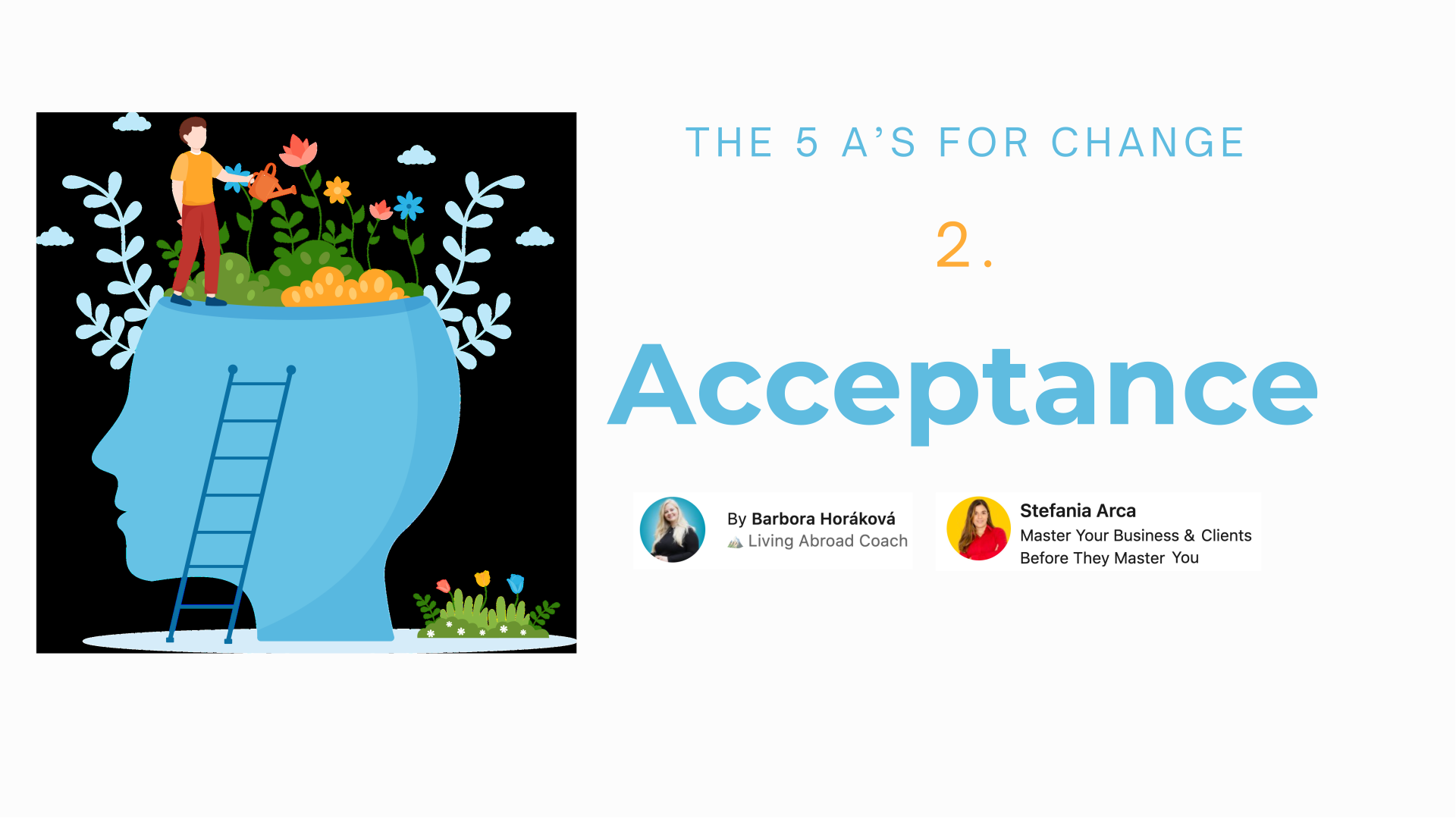
You can’t change what you don’t acknowledge.
and you can’t move forward if you’re fighting reality.
Here’s the uncomfortable truth: after awareness comes the hardest part of transformation, Acceptance for Change. Not the planning, not the strategy sessions, not even the execution. Rather, it’s the moment when you must stop fighting what is and start working with reality instead of against it.
Most people think acceptance means giving up. However, it’s actually the opposite. Furthermore, acceptance is what gives you the power to choose your response instead of staying trapped in resistance.
The Brain’s Survival Instinct That Blocks Acceptance for Change
Our brains are wired for survival, not growth. Consequently, once something becomes familiar, even dysfunction, your mind defaults to “We’re safe here. We don’t need to change anything.”
Additionally, this is why leaving your comfort zone feels so threatening. When you decide to change, your brain interprets this as entering survival mode again. Therefore, it will resist with everything it has, creating fear, doubt, and endless reasons why staying put is the “safer” option.
During my LinkedIn Live series with mindfulness coach Barbora Horáková, we explored this phenomenon deeply. The only way to break through this biological resistance is acceptance, acknowledging that discomfort is not just normal, it’s necessary.
“Everyone is going to go through a painful moment every time we want to change something. You’re not going to be the only one struggling with it.”

What Acceptance Actually Means (And What It Doesn’t)
Acceptance doesn’t mean being passive or resigned. Instead, it means carrying your current situation without resistance, denial, or judgement. Moreover, it’s about facing market realities, dysfunctional teams, or internal blocks without pretending they don’t exist.
Furthermore, acceptance happens when leaders stop making excuses and start dealing with what’s actually in front of them. Whether your business isn’t growing as expected, your processes are broken, or your team dynamics are toxic—acceptance means calling it what it is.
Importantly, acceptance isn’t about liking your situation. Rather, it’s about stopping the energy drain of fighting reality so you can redirect that energy toward changing it.
The Hidden Cost of Non-Acceptance
What happens when you refuse to accept current reality? Initially, you might think you’re protecting yourself from pain. However, the opposite occurs, you create more suffering for everyone involved.
During our live discussion, we talked about businesses still blaming COVID five years later. We are five years after COVID. You can’t use this excuse anymore. If you’re still saying your problems stem from external events that happened years ago, you’re refusing to accept that markets change, people change, and stakeholder expectations evolve.
“If you don’t face the change today, you’re going to have a bigger pain later because you’ll need to change anyway. But now you’ll have fewer resources, less budget, damaged reputation, and you’re not attracting the best talent anymore.”
This resistance creates a dangerous cycle. The longer you delay acceptance, the more complex and expensive the eventual change becomes.
The Personal Cost of Fighting Change
Barbora shared something profound about the individual impact of non-acceptance: when you normalise toxic conditions for too long, you lose yourself. Moreover, if a company loses reputation and revenue through resistance, employees lose their sense of identity and capability.
Consequently, rebuilding becomes exponentially harder. When you’ve been “broken into thousands of pieces,” as Barbora described it, you need to “glue all of them back together.” However, the person you rebuild isn’t the same as who you were before and often, that’s the point.

Building Acceptance for Change Through Practical Tools
Ready to stop fighting reality? Start with these strategies that Barbora and I discussed:
First, name the change you want to make. Specifically, what are you not willing to tolerate anymore? Therefore, clarity about your pain points makes acceptance easier because you’re not trying to fix everything at once.
Second, conduct a reality test. Be brutally honest about your current situation. Don’t try to find shortcuts or minimise the challenge ahead. Additionally, use frameworks like SWOT analysis to assess strengths, weaknesses, opportunities, and threats without sugarcoating the results.
Finally, ask yourself: what am I not willing to feel? Usually, we resist change because we’re avoiding specific emotions—fear, disappointment, uncertainty. However, once you identify what you’re trying to avoid, you can work with those feelings instead of being controlled by them.
Long Story Short for Acceptance for Change
Acceptance for change isn’t the end of your power, it’s the beginning. When you stop wasting energy fighting what is, you suddenly have that energy available for creating what could be.
Nevertheless, mastering acceptance for change doesn’t mean accepting everything forever. Rather, it means accepting your starting point so you can move forward strategically instead of reactively.
Remember: normalising toxic conditions because acceptance for change feels scary will cost you more than facing the discomfort now. Furthermore, the longer you wait to develop acceptance for change, the more expensive and complicated the solution becomes.
Your Next Move: From Resistance to Response
Acceptance for change gives you choice. Instead of being trapped in automatic reactions, you can consciously decide how to respond to your circumstances. Moreover, this shift from victim to strategist changes everything about your capacity for transformation.
The question isn’t whether you should develop acceptance for change, it’s how quickly you can stop fighting reality so you can start changing it.
Developing acceptance for change requires some deep work and transformation. However, acceptance for change actually helps you adapt to new circumstances rather than being overwhelmed by them. Therefore, the more resistance you have around letting go of the old, the less likely you’ll be able to embrace the new.
Want to dive deeper into the complete framework for transformation? Watch our full discussion on acceptance for change and the other steps in our YouTube Live series.

Next week, we’ll explore adaptability, how to become flexible enough to shape yourself for the transition from where you are to where you want to be.
Until then, stop fighting what is. Your future depends on developing true acceptance for change.

You now have the complete 5 A’s framework: Awareness, Acceptance, Adaptability, Accountability, and Action. The question isn’t whether you know what to do, it’s whether you’ll actually do it.
Until then, pick one small action and take it today. Your future depends on your willingness to move from knowing to doing.