Is your project moving forward—but the final outcome is a little fuzzy? You might be experiencing Agile project management in action. If you’re a client wondering why the delivery feels more like a co-creation than a fixed contract, this guide is for you.
We’ll unpack what Agile project management truly means in service businesses, why it feels so different from “traditional” delivery, and how embracing its uncertainty can actually lead to better, faster, and more aligned results.
The Strategic Problem: Why Agile Feels Uncomfortable (Especially for Clients)
Let’s be honest: The traditional project promise is a comfort zone. Most clients are used to a clear promise: “Here’s what we’ll deliver, how much it’ll cost, and when it’ll be done.” It’s predictable and reassuring.
But in Agile, you rarely get that.
Why? Because Agile delivery systems work with uncertainty, not against it. You know the starting point. You define a direction. But the exact destination evolves with you.
Without clear communication, this can feel chaotic.
Business impact if ignored:
- Misunderstandings between teams and clients
- Frustration over shifting timelines or deliverables
- Loss of trust or momentum midway through the project
But when explained and embraced, Agile becomes one of the most powerful tools for high-quality, client-aligned outcomes.
The Agile Delivery System: How It Works (And Why It’s Different)
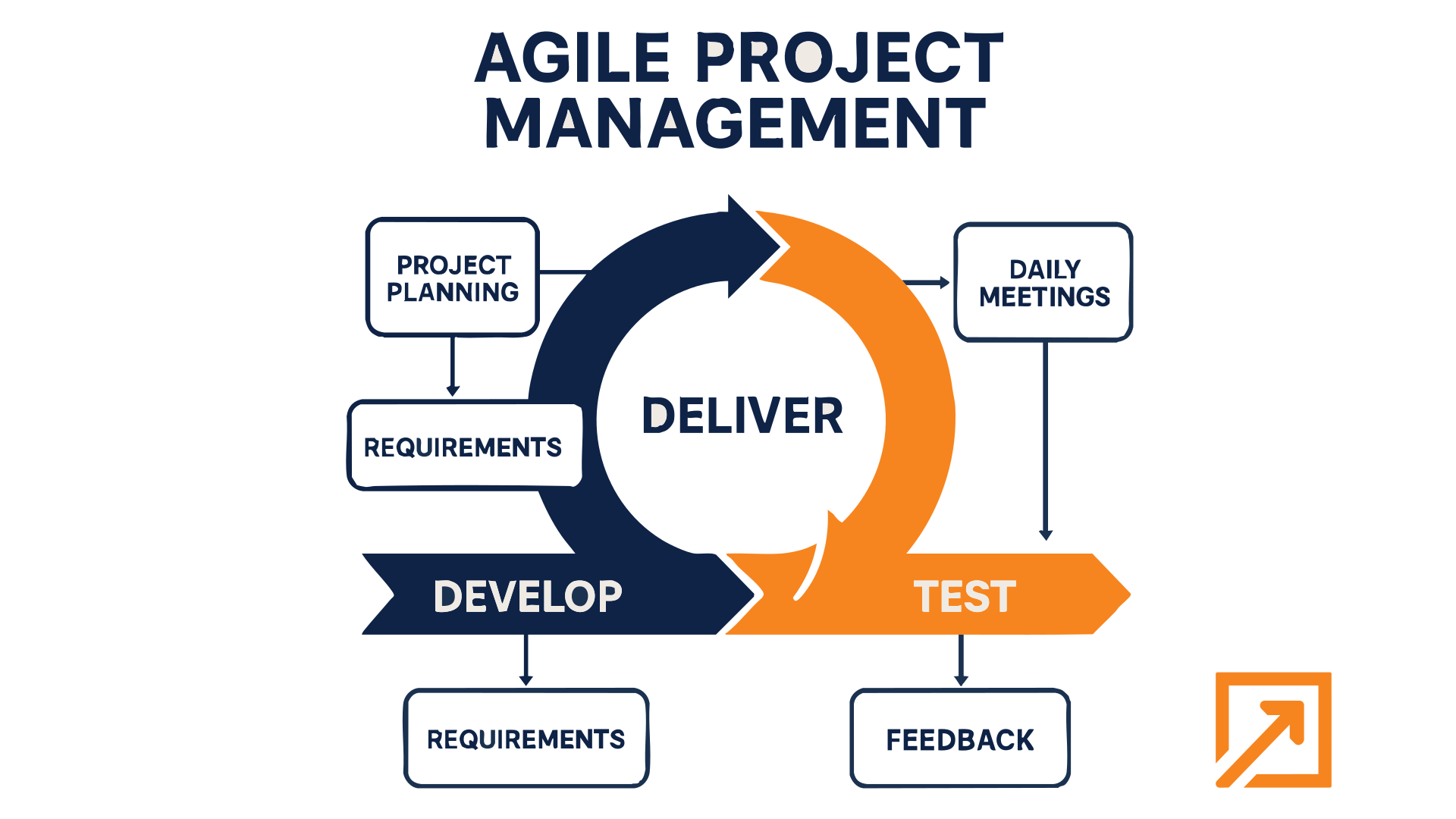
Agile isn’t about “doing things fast.” It’s about responding smartly to what changes while we work.
Here’s how it contrasts with traditional models:
Traditional Project Management
- Fixed scope, timeline, and cost.
- Full plan created upfront.
- Success = “Did we deliver what we said at the start?”
Agile Project Management
- Scope evolves over time.
- Short, iterative planning cycles (called sprints).
- Success = “Are we still solving the right problem in the best way?”
Agile works especially well when:
- The outcome isn’t 100% defined upfront.
- Innovation, creativity, or testing is part of the process.
- Client feedback needs to be integrated regularly.
In other words, Agile isn’t vague. It’s structured flexibility.
Case Example: Website Redesign for a Marketing Studio
A marketing agency hired us to redesign their website. Their brief was clear: “Make it feel more premium.” To them, this initially meant a sleek, minimal design with high-end photography. But after our first sprint of brand analysis and user testing, we discovered that their audience actually valued a more human, story-driven approach.
The “premium” feel evolved from pure aesthetics to a more authentic, trustworthy experience. Instead of locking everything down, we worked in Agile sprints:
- Sprint 1: Brand tone, competitor benchmarks, user goals.
- Sprint 2: Homepage prototypes and testing.
- Sprint 3: Feedback integration, visual refinement.
- Sprint 4: SEO, performance, and responsive design.
The result was a site that reflected real feedback, not assumptions. The client felt heard, co-created the direction, and launched faster than with a rigid brief.
Practical Takeaways: How to Be a Great Agile Client
Agile works best when the client is informed and empowered. Here’s how to play your part:
- Expect iteration. You won’t see the full picture on day one—and that’s a feature, not a bug.
- Clarify priorities early. What matters most: speed, aesthetics, or functionality?
- Give fast, honest feedback. Silence slows progress. Timely input shapes the next sprint.
- Trust the process. Agile is built for change. Stay open to refinement.
- Redefine success. Instead of “Did we stick to the original plan?” ask: “Are we getting better with each round?”
Conclusion: Agile Isn’t Uncertainty—It’s Adaptability
Clients don’t just buy deliverables. They buy outcomes. Agile project management doesn’t promise a perfect plan—it delivers a flexible path to the right result. When trust, feedback, and iteration are built in, you get a project that grows with your business.
Ready to build smarter, not just faster? A quick chat can reveal if Agile is the right fit for your project. Book your Agile Diagnostic Call with Stefania to explore what flexible, client-first delivery could mean for your next project.